Advanced Micro Devices Today
AMD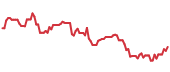
Advanced Micro Devices
$406.03 0.00 (0.00%) As of 11/25/2026 04:00 PM Eastern
- 52-Week Range
- $188.22
▼
$658.52 - P/E Ratio
- 88.27
- Price Target
- $640.11
When Advanced Micro Devices NASDAQ: AMD filed a shelf registration covering about 337 million shares for potential resale in late November, the market reacted cautiously. AMD's stock price pulled back toward the $376 level as investors digested the headline dilution risk tied to penny-exercise warrants held by OpenAI and Meta Platforms NASDAQ: META.
At first glance, registering the equivalent of roughly 20% of outstanding shares for resale looks like a heavy supply overhang. A deeper look at the mechanics tells a different story. Registered pursuant to contractual registration rights alongside shares associated with recent acquisitions, these warrant shares are not an imminent flood of new equity. They serve as a performance-based incentive to secure long-term customers.
By tying equity unlocks to large-scale hardware purchases, semiconductor companies are redefining how they secure long-term demand. For investors navigating the artificial intelligence infrastructure build-out, understanding this warrant structure offers a unique window into future revenue visibility.
The Administrative Math Behind the Sell-Off
The late-November Form S-3ASR filing was primarily an administrative requirement. Under agreements associated with its strategic artificial intelligence acquisitions of World Labs and Taalas, AMD registered shares issued or issuable in connection with those transactions. The filing also covers contractual piggyback registration rights for about 320 million potential warrant shares previously granted to OpenAI and Meta Platforms.
Because the registration covers third-party resales rather than a primary issuance, Advanced Micro Devices receives no cash proceeds from those resales. As of the end of the third quarter, none of those customer warrants had vested or become exercisable. Registering the shares does not accelerate their vesting.
The filing prepares the legal mechanism for when, or if, strict performance milestones are achieved over the next several years. Institutional buyers understand this distinction, which is why active growth managers utilized the recent pullback as an accumulation zone while retail sentiment temporarily soured.
Gigawatts and Milestones
The core value of this arrangement lies in the vesting conditions. OpenAI and Meta Platforms each hold warrants for up to 160 million shares with a nominal exercise price of one cent per share, expiring between 2030 and 2031.
These shares unlock in progressive tranches, and the hurdles are exceptionally high. The initial tranche for each customer is tied to the delivery or shipment of the first gigawatt of AMD Instinct GPUs. To unlock the full equity allotment, each customer must purchase six gigawatts' worth of hardware and satisfy additional conditions.
These deployments go beyond standalone chips. They involve the full-stack Helios rack-scale architecture, combining Instinct MI450-series graphics processing units (GPUs) with sixth-generation EPYC central processing units (CPUs) and ROCm software. This deep integration offers a comprehensive alternative to systems built by NVIDIA NASDAQ: NVDA.
Alongside the physical hardware requirements, vesting is tied to escalating stock-price milestones, capping out at a $600 share price for the final tranche. Both customers only reap the full financial reward if they take physical delivery of hardware and the broader market rewards the semiconductor designer with a premium valuation.
Equity Acts as the Ultimate Customer Rebate
Building out artificial intelligence infrastructure requires substantial capital. In the third quarter, Meta Platforms recorded around $34.9 billion in capital expenditures, including principal payments on finance leases, alongside roughly $454.5 billion in non-cancelable contractual commitments, primarily related to infrastructure and cloud capacity.
The warrant structure serves as a strategic pressure-relief valve for these AI infrastructure customers. Earning up to 160 million shares could give Meta Platforms a highly liquid equity asset it can eventually monetize to offset those capital expenditures. This effectively lowers the total cost of ownership for the hardware without requiring upfront cash rebates from Advanced Micro Devices.
This framework creates a powerful economic alignment. Abandoning AMD's hardware roadmap before meeting the warrant milestones could cost Meta Platforms or OpenAI tens of billions of dollars in potential equity value.
Deepening this reciprocal relationship, Advanced Micro Devices recently committed to investing $1 billion in Meta Platforms' equity offering. AMD's EPYC processors also power Meta's Muse AI agent. This web of mutual investments and technical collaboration increases the financial incentive for customers to remain within AMD's ecosystem.
The Accounting Friction Behind the Silicon Boom
This strategy presents natural trade-offs. A potential 19% to 20% expansion in the total share count is a meaningful dilution overhang. AMD accounts for the warrants as liabilities, subject to quarterly fair-value remeasurement, until the conditions for equity classification are met.
Advanced Micro Devices Stock Forecast Today
12-Month Stock Price Forecast:$640.1157.65% UpsideModerate BuyBased on 44 Analyst Ratings | Current Price | $406.03 |
|---|
| High Forecast | $1,250.00 |
|---|
| Average Forecast | $640.11 |
|---|
| Low Forecast | $260.00 |
|---|
Advanced Micro Devices Stock Forecast DetailsIn AMD's third quarter, this resulted in an approximate $1.1 billion non-cash remeasurement charge that weighed on reported earnings. As the stock price rises toward those higher vesting thresholds, those non-cash generally accepted accounting principles (GAAP) charges could increase. The grant-date value of the warrants also reduces reported revenue as qualifying customer sales are recognized.
The fundamental momentum generated by these customer relationships appears to be outpacing the dilution math. Third-quarter revenue for AMD rose roughly 44.7% year-over-year (YOY) to about $13.38 billion, driven by a 97% expansion in the Data Center segment. Management guidance for the fourth quarter points toward $17 billion in revenue, representing a 66% YOY increase. Data Center AI revenue is projected to overtake traditional server CPU revenue for the first time.
Looking further ahead, management recently raised the corporate revenue growth projection for 2027 to more than 80%. With operating expenses expected to grow much slower than top-line revenue, operating leverage and cash flow generation from these multi-year deployments can help outrun the gradual increase in share count.
Evaluating the Risks Before the Next Catalyst
Evaluating high-growth semiconductor assets requires a balanced perspective. AMD trades at a trailing price-to-earnings ratio near 88x, which requires near-flawless execution to justify. While the forward multiple compresses to a more reasonable 27x, ongoing structural headwinds remain to monitor.
Management has cautioned that scaling Data Center AI systems is modestly dilutive to corporate gross margins. The Client and Gaming segment remains soft, with memory cost inflation likely to pressure the broader PC market into 2027.
Despite these near-term frictions, the foundational demand appears solid. The multi-year, tranche-based warrant structure provides customers with significant financial incentives to maintain hardware purchases through 2030 and 2031, potentially offering a rare buffer against the semiconductor industry's traditional cyclicality.
For those watching AMD, a key milestone will be confirmation of the first one-gigawatt hardware delivery. Verifying that initial delivery could help validate the warrant strategy, shifting the narrative away from perceived dilution and back toward sustained revenue visibility.
Before you consider Advanced Micro Devices, you'll want to hear this.
MarketBeat keeps track of Wall Street's top-rated and best performing research analysts and the stocks they recommend to their clients on a daily basis. MarketBeat has identified the five stocks that top analysts are quietly whispering to their clients to buy now before the broader market catches on... and Advanced Micro Devices wasn't on the list.
While Advanced Micro Devices currently has a Moderate Buy rating among analysts, top-rated analysts believe these five stocks are better buys.
View The Five Stocks Here
A strong long-term portfolio starts with companies that can survive recessions, inflation, changing consumer habits, and shifting market leadership.
This report names seven blue-chip stocks across technology, retail, consumer staples, healthcare, networking, sporting goods, and utilities that offer investors a mix of stability, income, growth, and staying power.
Get This Free Report
Continue following MarketBeat
Add MarketBeat as your preferred source on Google to see our latest stories in your feed.
