Jensen Huang's abrupt resignation from NVIDIA Corporation NASDAQ: NVDA, amid revelations about extramarital affairs and mounting national-security scrutiny, has deepened a sell-off that has wiped hundreds of billions of dollars from NVIDIA's market capitalization and rattled the broader semiconductor sector.
NVIDIA Corporation (NVDA) Price Chart for Thursday, November, 12, 2026
With so much of the AI chip market concentrated around NVIDIA, the loss of its longtime leader introduces undeniable uncertainty. Cloud giants could now have fresh incentives to shift artificial intelligence chip orders toward rival graphics processing unit and custom silicon designers.
Yet a projected $700 billion hyperscaler capital-spending cycle doesn't rely on one executive. While the crisis creates opportunities for NVIDIA competitors to gain real market share, it could also accelerate efforts already underway in Washington to tighten chip export controls, mandate hardware tracking, and restrict overseas access to U.S. cloud computing.
Investors looking at rival chipmakers should weigh these newfound opportunities against industry-wide regulatory friction that could test valuations across the entire semiconductor supply chain. Finding the right balance means looking past the immediate headlines and focusing on the underlying infrastructure buildout.
Why AI Compute Outlasts the C-Suite
Taiwan Semiconductor Manufacturing Today
TSM
Taiwan Semiconductor Manufacturing
$405.85 -7.50 (-1.82%) As of 03:59 PM Eastern
This is a fair market value price provided by Massive. Learn more. - 52-Week Range
- $266.82
▼
$487.47 - Dividend Yield
- 0.85%
- P/E Ratio
- 26.12
- Price Target
- $533.89
Following Huang's resignation, NVIDIA's board appointed CFO Colette Kress as interim CEO and longtime director Harvey C. Jones as its first-ever board chair. Kress will continue serving as CFO while the board searches for a permanent CEO.
While the leadership transition and key-person uncertainty have raised questions about NVIDIA's competitive position and prompted some Wall Street downgrades, the AI infrastructure spending driving the semiconductor industry extends well beyond one company. The top four cloud providers are on pace to spend nearly three-quarters of a trillion dollars on infrastructure by the end of 2026.
Taiwan Semiconductor Manufacturing Company Limited NYSE: TSM is particularly well-positioned in this environment because it manufactures advanced chips for NVIDIA and several of its rivals. The foundry recently reported October revenue growth of nearly 60% year over year, suggesting underlying hardware production continues at a steady pace despite executive turnover in the United States.
NVIDIA Corporation expects third-quarter revenue to hover around $108 billion, a figure that already assumes zero data center compute sales to China. When the company reports fiscal Q3 2027 results on Nov. 17, investors will be watching not only whether NVIDIA meets those expectations, but also whether its updated guidance signals continued strength in AI demand amid the leadership transition.
Knights on the Move: The Great Supplier Diversification
Advanced Micro Devices Today
AMD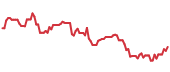
Advanced Micro Devices
$585.30 +32.40 (+5.86%) As of 04:00 PM Eastern
- 52-Week Range
- $188.22
▼
$658.52 - P/E Ratio
- 127.24
- Price Target
- $640.11
Governance uncertainty at the industry leader could accelerate a trend already in motion. Cloud hyperscalers are actively working to reduce their reliance on a single vendor by expanding their use of alternative merchant accelerators and custom computing solutions.
Advanced Micro Devices, Inc. NASDAQ: AMD is a leading merchant alternative for general-purpose training and inference. Its recent data center revenue grew nearly 100% year over year, supported by rack deployments at major technology companies. The company also benefits when cloud providers build their own custom chips by supplying the trusted host processors that operate alongside proprietary AI accelerators. Alphabet Inc. NASDAQ: GOOGL uses fifth-generation AMD EPYC processors in Google Cloud's TPU 8tx host infrastructure.
Broadcom Inc. NASDAQ: AVGO captures a different angle of this diversification trend. Instead of competing directly in the general-purpose market, the company co-designs custom application-specific integrated circuits (ASICs) for hyperscalers. Broadcom recently arranged financing for custom AI systems and related long-term equipment leases, underscoring the scale of investment in tailored AI infrastructure. With net margins hovering around 43% and a forward price-to-earnings ratio around 20, Broadcom offers a highly profitable alternative for investors seeking semiconductor exposure.
Other players like Marvell Technology, Inc. NASDAQ: MRVL, which drew about 79% of its fiscal Q2 2027 revenue from data centers, and Amazon.com, Inc. NASDAQ: AMZN, which uses internal custom chips, are carving out essential roles in this expanding ecosystem.
The Regulatory Rook: Export Controls Could Create New Hurdles for NVIDIA Rivals
Broadcom Today
$364.36 +19.14 (+5.54%) As of 04:00 PM Eastern
- 52-Week Range
- $289.77
▼
$495.00 - Dividend Yield
- 0.71%
- P/E Ratio
- 46.53
- Price Target
- $530.52
While competitors could benefit from NVIDIA's leadership uncertainty, the controversy surrounding overseas sales may also intensify pressure on Washington to tighten U.S. export policy. Bipartisan lawmakers were already advancing proposals to require location-tracking capabilities on advanced processors and restrict overseas access to U.S. AI computing. The current crisis could add urgency to those efforts.
Separately, the Commerce Department is reportedly preparing to extend advanced AI chip licensing requirements to seven additional countries, including Norway and Singapore. The proposal remains under review and could include exemptions for qualifying U.S.-operated data centers.
The proposed chip-security measures would apply to advanced processors that meet specified technical criteria, regardless of which company makes them. Extending export licenses and end-user monitoring could introduce bureaucratic delays across international supply chains. If a hyperscaler directs billions toward Nordic data centers to secure surplus grid power, adding those countries to licensing lists would directly complicate overseas deployments using any advanced processors or networking equipment.
The semiconductor sector also faces macro margin pressures. High-bandwidth memory costs are rising, and analysts expect this to trim gross margins across the board through early next year. NVIDIA Corporation projects gross margins to trough near 71% in fiscal Q4 2027, while AMD is guiding fourth-quarter margins around 55%. Combined with the potentially heavy compliance costs of tracking hardware globally, the industry faces friction that could pressure profitability and free cash flow generation even as demand for AI infrastructure continues to grow.
The China Paradox: Stronger Domestic Demand Meets Manufacturing Limits
Stricter U.S. rules might seem like an unintended victory for Chinese chipmakers by channeling more domestic demand toward local alternatives. Closing data center loopholes cuts international developers off from rented overseas compute, effectively creating a captive market for domestic designers. Recent financial results from regional players show triple-digit profit growth driven by this isolated demand.
That potential windfall, however, faces a major obstacle: China's manufacturing constraints. Allied equipment bans keep local foundries restricted to older manufacturing processes with significantly lower yields than their Taiwanese counterparts. Tightened U.S. controls give domestic manufacturers a protected local market but prevent them from competing globally.
Winning the Match: Finding Value in the Semiconductor Shift
NVIDIA Today
$166.19 -7.54 (-4.34%) As of 04:00 PM Eastern
- 52-Week Range
- $148.80
▼
$243.37 - Dividend Yield
- 0.60%
- P/E Ratio
- 21.01
- Price Target
- $283.63
The central question for investors is whether current valuations properly reflect both the opportunities and the incoming regulatory hurdles.
NVIDIA Corporation's recent pullback has left shares trading at roughly 11x forward earnings, suggesting the market is already discounting substantial policy friction. Peers with higher multiples might be vulnerable if licensing delays or power grid constraints slow their deployment timelines.
Structural computing demand remains a durable theme. Investors might focus on profitable infrastructure enablers with reasonable forward multiples and diversified customer bases. Companies providing the essential networking, custom design, and manufacturing capabilities are often better insulated from the volatility of single-product cycles or executive transitions.
By weighing real market share openings against the broader regulatory crossfire, investors can better position their portfolios for the next phase of the infrastructure buildout.
Before you consider NVIDIA, you'll want to hear this.
MarketBeat keeps track of Wall Street's top-rated and best performing research analysts and the stocks they recommend to their clients on a daily basis. MarketBeat has identified the five stocks that top analysts are quietly whispering to their clients to buy now before the broader market catches on... and NVIDIA wasn't on the list.
While NVIDIA currently has a Moderate Buy rating among analysts, top-rated analysts believe these five stocks are better buys.
View The Five Stocks Here
The AI boom extends far beyond the biggest tech names. Discover 10 companies supplying the memory, storage, networking, semiconductor manufacturing, and power infrastructure that make AI possible. Learn where the next wave of AI investment opportunities may emerge—and the key risks investors should watch as the global AI buildout accelerates.
Get This Free Report
Continue following MarketBeat
Add MarketBeat as your preferred source on Google to see our latest stories in your feed.
