Taiwan Semiconductor Manufacturing Today
TSM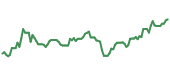
Taiwan Semiconductor Manufacturing
$394.43 -10.37 (-2.56%) As of 02:01 PM Eastern
This is a fair market value price provided by Massive. Learn more. - 52-Week Range
- $266.82
▼
$487.47 - Dividend Yield
- 0.88%
- P/E Ratio
- 25.40
- Price Target
- $528.78
The
artificial intelligence (AI) boom often focuses on software developers and fabless chip designers, leaving the physical constraints of manufacturing lurking in the shadows. When the entire
technology sector tries to pivot to generative AI at once, the supply chain quickly hits a physical ceiling.
Taiwan Semiconductor Manufacturing Company NYSE: TSM sits just beneath that ceiling. Investors evaluating infrastructure plays might start to notice a shift in how value is captured across the silicon ecosystem. Industry reports suggest TSMC is preparing a coordinated series of price increases across its most advanced packaging and fabrication services, testing the limits of its pricing power. If implemented, those increases would help the foundry pass its expansion costs downstream.
Packaging Power: Why Fabless Designers Pay the Toll
To build modern AI accelerators, designers integrate high-bandwidth memory directly alongside compute dies. This integration requires highly specialized advanced packaging. TSMC's proprietary Chip-on-Wafer-on-Substrate technology is the industry standard for this process, creating a commanding position in high-end AI packaging.
Traditional organic substrates struggle to provide the fine-pitch interconnects necessary for the terabyte-per-second memory interfaces demanded by next-generation graphics processing units. When processing large language models, data transfer speed is just as critical as raw compute power, making silicon stacking a core requirement.
Recognizing this heavy reliance, TSMC could raise prices for its advanced packaging services by 10% to 20%. Downstream clients like NVIDIA NASDAQ: NVDA and Advanced Micro Devices NASDAQ: AMD have little room to negotiate.
This inability to negotiate stems from the fact that new architectures, such as NVIDIA's Blackwell and Rubin, require extensive testing cycles. According to industry estimates, final testing for Blackwell takes about four times as long as Hopper, while Rubin could require up to seven times as long as Hopper.
These extended cycles lock up testing capacity and equipment bandwidth across the foundry. Fabless designers find themselves prioritizing guaranteed production slots over unit costs. Adding to the packaging premium, wafer prices for TSMC's advanced 2-nanometer and 3-nanometer nodes could increase by an estimated 3% to 6% starting in early 2027. Successfully implementing these rate hikes across service lines without causing client attrition would demonstrate the outsized leverage in the semiconductor space.
Margin Mechanics: Expanding Profitability Through Scale
Pricing power directly influences profitability, but those premiums are meant to help offset heavy capital requirements. In the third quarter of 2026, Taiwan Semiconductor Manufacturing Company reported a slight sequential dip in gross margin, landing around 66.4%.
At first glance, the contraction might suggest pricing weakness, but it reflects the capital-intensive ramp-up of the new 2-nanometer node. Advanced packaging margins, which have traditionally hovered below the corporate average, are steadily expanding toward parity as the new pricing structure takes effect.
The foundry maintained its 2026 capital expenditure guidance to an estimated $60 billion-$64 billion. Upstream equipment lead times for specialized packaging tools have stretched to around six to eight months. To bypass these delays, management reportedly placed equipment orders at existing prices without negotiating its usual vendor discounts. They prioritize scale over immediate cost efficiency because they have the leverage to pass these higher capital expenditure requirements directly to customers.
The strategy centers on ramping monthly advanced packaging capacity to roughly 130,000 wafers by the end of 2026, with an eye toward 200,000 wafers by 2027. Passing the expansion costs downstream allows TSMC to maintain an exceptional net margin, currently hovering near 51.5%, even while financing one of the largest industrial expansions in modern history.
Strategic Restraint: Walking Away From Terafab
Beyond pricing leverage, Taiwan Semiconductor Manufacturing exhibits stringent corporate discipline when navigating high-profile partnerships. Recent negotiations regarding Elon Musk's proposed Texas-based Terafab project highlight this dynamic. Despite the potential for a large influx of capital and guaranteed capacity demand, the foundry refused to yield operational control of the facility.
As a result, Musk indicated that Tesla NASDAQ: TSLA and SpaceX NASDAQ: SPCX will build and run the facility themselves. By walking away from a joint venture that compromises internal standards, TSMC insulates itself from high-risk external capital expenditure projects.
This decision protects the proprietary foundry moat and helps to keep management focused on high-margin, fully controlled operations rather than diluting expertise across experimental partnerships. Controlling the intellectual property and operational efficiency of every fab remains a core tenet of the underlying business model.
The Trickle-Down Effect: Inflation in the Silicon Stack
Investors assessing the current landscape should consider how these fundamental shifts affect valuation. Taiwan Semiconductor Manufacturing is trading with a forward price-to-earnings ratio of around 28. Given the raised revenue outlook, with recent quarterly revenue expanding over 41% year-over-year to approximately $46.72 billion and earnings per share beating estimates at $4.60, the market appears to be digesting the ability to command premium pricing.
Analyst consensus points to a 12-month average price target near $528, representing notable forecasted upside from current trading levels around $437. Wall Street recognizes that while software companies battle over subscription pricing, the physical layer of the AI ecosystem operates under different rules.
Interestingly, institutional investors currently own about 16.5% of TSMC stock, leaving substantial room for broader potential institutional buying as the advanced packaging narrative becomes more widely understood.
Investors might want to weigh the broader macroeconomic impact of these supply chain premiums. As fabless designers absorb higher fabrication and packaging costs, inflationary pressure on silicon eventually trickles down to consumer hardware.
Subsequent price increases in end-market products could dampen broader consumer-level aggregate demand over a multi-year horizon. Cautious investors may want to monitor downstream hardware sales data to gauge whether end consumers can absorb rising AI infrastructure costs, while those seeking exposure to the technology sector's physical backbone might add TSMC to their watchlist as its advanced-node expansion continues.
Before you consider Taiwan Semiconductor Manufacturing, you'll want to hear this.
MarketBeat keeps track of Wall Street's top-rated and best performing research analysts and the stocks they recommend to their clients on a daily basis. MarketBeat has identified the five stocks that top analysts are quietly whispering to their clients to buy now before the broader market catches on... and Taiwan Semiconductor Manufacturing wasn't on the list.
While Taiwan Semiconductor Manufacturing currently has a Buy rating among analysts, top-rated analysts believe these five stocks are better buys.
View The Five Stocks Here
A strong long-term portfolio starts with companies that can survive recessions, inflation, changing consumer habits, and shifting market leadership.
This report names seven blue-chip stocks across technology, retail, consumer staples, healthcare, networking, sporting goods, and utilities that offer investors a mix of stability, income, growth, and staying power.
Get This Free Report
Continue following MarketBeat
Add MarketBeat as your preferred source on Google to see our latest stories in your feed.
