A string of mid-November infrastructure outages across major U.S. banks, airlines, and federal agencies has exposed the fragility of aging, interconnected networks. The disruptions have drawn attention to the “Patchpocalypse,” a surge in software vulnerability discoveries fueled by artificial intelligence that is pushing IT teams to deploy security patches rapidly, sometimes at the risk of causing further outages. As enterprises audit their digital infrastructure to prevent costly downtime, cybersecurity budgets appear largely insulated from broader corporate cost-cutting measures.
Investors watching this shift may want to evaluate security vendors offering integrated cloud-native platforms. Companies expanding their secure access service edge (SASE) footprints are positioned to capture market share from legacy firewall providers as security perimeters move to the network edge.
Edge Security Takes Center Stage
The traditional corporate network, protected by a physical hardware firewall in a central server room, is struggling to keep up with modern enterprise demands. Remote workforces and cloud-based applications require a different architectural approach, one that secures the user and the application directly at the edge of the network.
This framework can replace some traditional hardware-based security with flexible cloud-delivered security. Recent market moves from legacy providers adapting to this reality, alongside steady growth from pure cloud-native platforms, highlight a permanent shift in enterprise technology spending.
As digital perimeters dissolve, network security becomes inherently decentralized. This creates a highly attractive recurring-revenue opportunity for vendors that can route traffic securely without sending it back through a central corporate hub. Bypassing the central data center can reduce latency and dependence on a single point of failure. For investors, the shift from selling physical hardware appliances to selling recurring software subscriptions often leads to higher gross margins and more predictable long-term cash flows.
The Patchpocalypse: How AI Uncovered Network Flaws
Between Nov. 12 and Nov. 17, a severe wave of infrastructure disruptions affected operations across the physical and digital economy. A Microsoft 365 outage disrupted widespread productivity applications, with Microsoft NASDAQ: MSFT providing updates on the incident and subsequent recovery process over nearly 36 hours. Network instability during router replacement work disrupted communications and radar feeds at 17 of the FAA's 22 air traffic control centers, prompting the Federal Aviation Administration to halt departures nationwide for nearly five hours and causing widespread flight delays and cancellations. An on-premises software bug at JPMorgan Chase NYSE: JPM delayed transactions, affecting customers at the bank and other financial institutions. Amazon Web Services, the cloud computing division of Amazon NASDAQ: AMZN, and the National Security Agency also experienced service disruptions.
These events had different immediate causes, but several involved software or network maintenance. New artificial intelligence vulnerability discovery models have exposed thousands of hidden code flaws across open-source software throughout the year. IT teams are rushing to deploy emergency security patches across aging, interconnected systems that can't keep up with the pace of configuration changes.
To prevent business-halting downtime, companies may increasingly turn to cloud edge architectures. In the cloud, companies can manage virtual patching and strict access controls dynamically, helping protect the broader network from localized failures of physical hardware components.
Check Point Software Pivots to Azure
Adapting to this demanding environment requires established players to modernize their delivery networks. On Nov. 18, Check Point Software Technologies NASDAQ: CHKP announced an expanded collaboration with Microsoft to deploy its edge platform directly onto Azure infrastructure.
Check Point Software Technologies Today
CHKP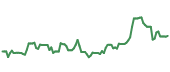
Check Point Software Technologies
$154.88 -0.62 (-0.40%) As of 11/20/2026 04:00 PM Eastern
- 52-Week Range
- $112.23
▼
$199.90 - P/E Ratio
- 18.64
- Price Target
- $151.32
The rollout is expected to add 48 new Azure points of presence and integrate with Microsoft Entra for identity-centric policy enforcement, reducing enterprise reliance on outdated virtual private networks. By leaning on Microsoft infrastructure, Check Point Software Technologies can scale its global reach without building a comparable global network of its own.
The financial data reflects a company in the middle of a strategic transition. In its third-quarter report, total revenue dipped by about 1% to approximately $670 million. Product and license revenue dropped 19% year over year as customers delayed physical appliance refreshes. The emerging cloud segments, however, show solid promise. Security subscriptions grew 11%, bringing subscription revenue to over half of total revenue. Annual recurring revenue for tools like email security and artificial intelligence threat detection expanded by more than 38%.
Management instituted a 12% to 20% price increase on firewall products in early October, which could help annual subscription revenue cross the $1.5 billion mark in the first half of 2027. Investors considering Check Point Software Technologies should weigh its value-oriented trailing price-to-earnings ratio of around 18 and a strong net margin near 32% against near-term headwinds. The organization faces elevated memory component costs and a strengthening Israeli shekel, which management projects could create up to a $50 million currency-related operating expense headwind in 2027, alongside ongoing sales force expansion.
Palo Alto Networks Bets Big
While Check Point Software Technologies manages a turnaround, Palo Alto Networks NASDAQ: PANW is capitalizing on the trend toward vendor consolidation. Large enterprises increasingly prefer to buy an end-to-end suite of tools from one provider rather than stitching together dozens of point solutions from different vendors. This consolidation strategy simplifies IT management and creates incredibly high switching costs, locking customers into the Palo Alto Networks ecosystem.
Palo Alto Networks Today
PANW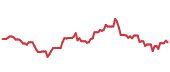
Palo Alto Networks
$343.45 -18.28 (-5.05%) As of 11/20/2026 03:59 PM Eastern
This is a fair market value price provided by Massive. Learn more. - 52-Week Range
- $139.57
▼
$432.33 - P/E Ratio
- 563.04
- Price Target
- $403.49
In its fiscal 2027 first quarter, Palo Alto delivered an approximate 39% revenue increase, reaching roughly $3.44 billion. Next-generation security annual recurring revenue rose 66% to $9.73 billion, with SASE annual recurring revenue growing 30%. Remaining performance obligations, a vital metric tracking contracted revenue not yet recognized, grew 35% to roughly $21 billion. The enterprise reported that net new platformizations, which are customers adopting multiple core platforms, more than doubled year-over-year.
Looking ahead, Palo Alto Networks agreed to acquire artificial intelligence startup Applied Compute in a $4.5 billion all-stock transaction. The move aims to embed native security into customizable enterprise artificial intelligence models.
While the acquisition broadens the product suite, it brings financial complexities that fundamental investors should monitor. Management expects operating margin dilution of up to 100 basis points in fiscal 2027 and 200 basis points in fiscal 2028. Gross margins already compressed 170 basis points in the first quarter due to hardware component costs and a higher mix of newer software offerings. Palo Alto is also committing less than $3 billion in cumulative capital expenditures through fiscal 2030 to build global inference capacity. With a forward price-to-earnings ratio sitting around 125, the equity is priced for continuous high performance, leaving little room for execution missteps.
Balancing Value and Growth at the Network Edge
The cybersecurity sector offers distinct fundamental profiles for portfolio positioning. Check Point Software Technologies offers a high-margin, cash-generative value play, using Microsoft Azure to scale its cloud transition and offset legacy hardware declines. In contrast, Palo Alto Networks operates as a premium-priced consolidation leader, aggressively acquiring emerging technologies to capture enterprise wallet share at the expense of near-term margin expansion.
Recent technology outages show that digital infrastructure reliability remains a board-level priority across all sectors of the economy. As companies restructure their networks to support automated patching and remote access, cloud-delivered edge security will likely remain a priority in corporate IT budgets. Cautious investors may prefer to monitor execution metrics, such as Check Point Software Technologies' subscription revenue acceleration or Palo Alto Networks' gross margin stability over the next two quarters, before taking a position in either equity.
Before you consider Check Point Software Technologies, you'll want to hear this.
MarketBeat keeps track of Wall Street's top-rated and best performing research analysts and the stocks they recommend to their clients on a daily basis. MarketBeat has identified the five stocks that top analysts are quietly whispering to their clients to buy now before the broader market catches on... and Check Point Software Technologies wasn't on the list.
While Check Point Software Technologies currently has a Hold rating among analysts, top-rated analysts believe these five stocks are better buys.
View The Five Stocks Here
Nuclear energy is entering a new growth cycle as rising power demand, expanding data centers, and renewed policy support bring the sector back into focus. After strong gains in recent years, the most impactful phase of nuclear investment may still be ahead. This report highlights seven nuclear energy stocks positioned across the value chain—combining near-term revenue with long-term upside as next-generation technologies scale. Click the link below to unlock the full list.
Get This Free Report
Continue following MarketBeat
Add MarketBeat as your preferred source on Google to see our latest stories in your feed.
